100 ¥ = 61.95 Rub
 1 $ = 91.56 Rub
 Tottori License #3-92


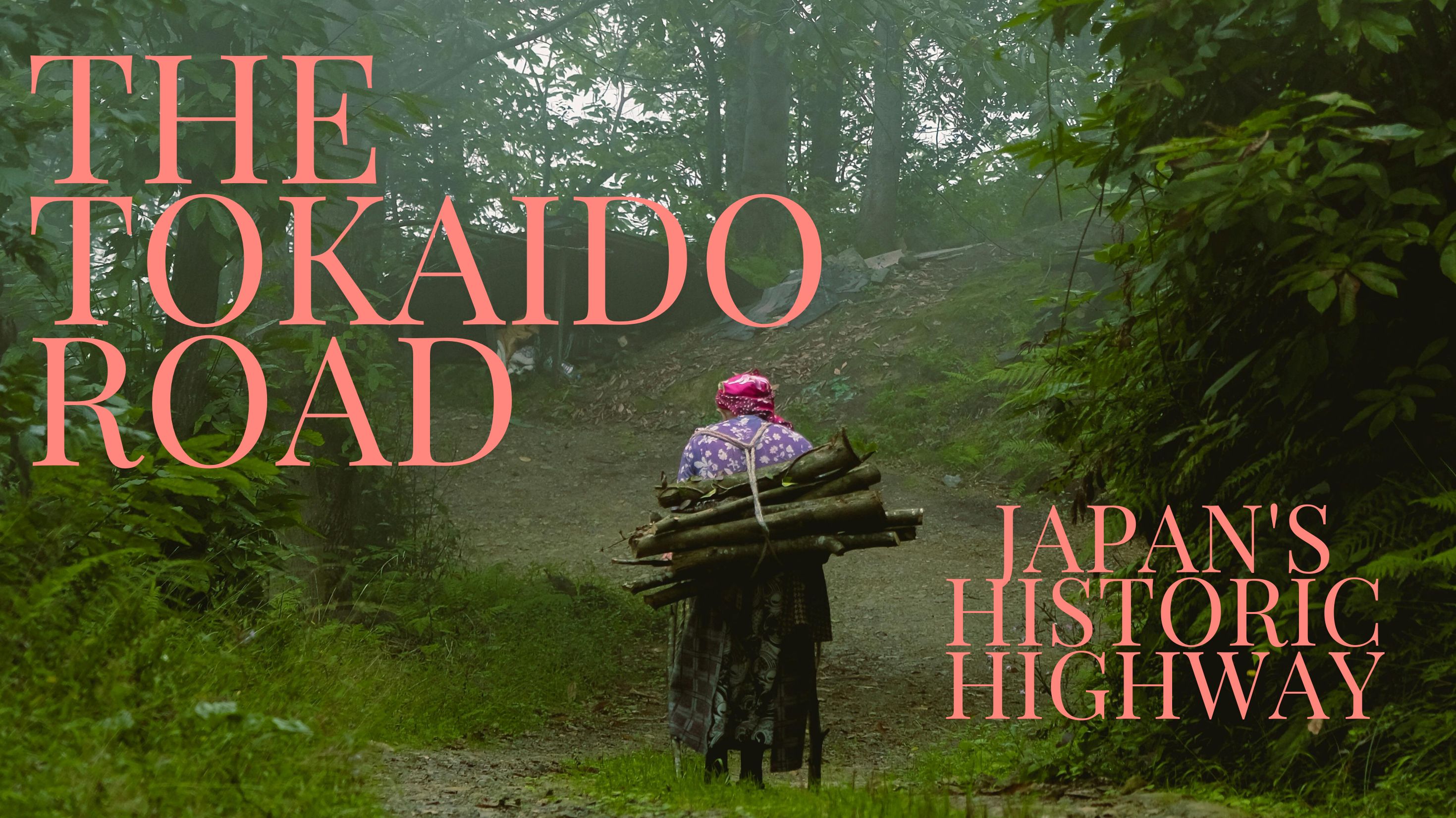
The Tokaido was once Japan's most important road, connecting the capital of Edo with the imperial residence in Kyoto. This route served daimyo and samurai who traveled alongside merchants and common people on pilgrimages.
During the Edo period (1603–1868), the Tokaido became one of the country's five main highways radiating from Edo (now Tokyo), and the primary artery for communication with Kyoto. This route, named after an administrative region, had been used since ancient times but was significantly upgraded in the 17th century. In 1624, the last of the road's famous 53 post stations was added at Shono, becoming the forty-fifth along the route—now part of Mie Prefecture.
After victory at the Battle of Sekigahara, Tokugawa Ieyasu began ensuring control over Japan. In 1601, he ordered that each station on the Tokaido maintain 36 horses for official messengers to ensure rapid communication between Edo and the imperial court in Kyoto and Osaka. The road provided safe and steady flow of goods and travelers, playing a key role in the country's development.
With the introduction of the "alternate attendance" system called sankin-kotai, daimyo from various regions had to regularly visit Edo to demonstrate their loyalty to the shogunate. They were accompanied by large groups including retainers and porters. The increased flow of people on the Tokaido promoted the development of various service facilities at the stations along the route. Checkpoints were introduced to ensure security. Although movement on the road was generally smooth, authorities created obstacles—for example, prohibiting passage across bridges on certain rivers to control the flow.
Over time, during the peaceful Edo period, the Tokaido moved away from its military role and became a popular tourist route. Commoners and pilgrims began actively traveling to visit sacred sites such as Mount Fuji and Ise Shrine.
Mount Fuji was considered sacred, and during this period the number of "Fuji-ko" associations dedicated to ascending the summit as a religious practice sharply increased. Members of these associations traveled en masse on pilgrimage. The constant flow of pilgrims to Ise Shrine also grew, especially in auspicious years. History records cases where people sent their dogs as their representatives on pilgrimage, with the animals carrying travel funds around their necks.
Literature and Art
Writer Jippensha Ikku captured the hearts of travel enthusiasts with his comic novel "Tōkaidōchū hizakurige," translated by Thomas Satchell as "Shank's Mare." The first volume, published in 1802, became a bestseller. In the work, two main characters, Yajirobei and Kitahachi, humorously explore the road to Kyoto, describing famous places, regional dishes, and local customs.
Inspiration for travelers also came from artist Utagawa Hiroshige's woodblock print series "The Fifty-three Stations of the Tokaido," published in the 1830s. These lyrical depictions of each station along the road awakened a passion for travel.
For those who wanted to travel but lacked the opportunity, themed board games called sugoroku were available. In these games, players rolled dice and could take a "journey" through illustrated stops on the highway, enjoying virtual wanderings.
Rapid Communication
A network of couriers known as hikyaku performed functions similar to modern postal and telephone services. These couriers, whose name translates as "flying feet," covered routes in three to four days. The shogunate ensured the presence of official messengers at each station to transport boxes, letters, and parcels. Additionally, there were special messengers for daimyo and private machi-hikyaku used for citizens' personal needs.
The system of using such messengers continued into the early Meiji era (1868–1912). However, after postal service was transferred to government management in 1871, courier service operators united to create a transportation company.
The spirit of the hikyaku messengers inspires the tradition of the modern Hakone Ekiden, held during the New Year season. In this tournament, university teams compete on a course following the old Tokaido in a two-day race from Tokyo to Hakone and back.
What Did Travelers Bring?
In the early nineteenth century, interest in travel, especially to Ise Shrine, led to an increase in guidebooks. One of these was "Ryokō yōjinshū" (Precautions for Travelers), which recommended bringing various items: a case with brush and ink, a folding fan, needle and thread, a pocket mirror, lantern, candle, and flint-and-steel lighter. The author also urged travelers not to forget rope and hooks, useful for drying clothes at stops.
Not all travelers were human. There's a famous story about an elephant's journey in 1728. A Chinese merchant gifted the shogunate a pair of elephants. While the female soon died, the male reached Edo, stopping at Tokaido stations. Yoshimune, the shogun, admired this exotic animal, which lived in Hamarikyu Gardens until 1742.
There was also a famous annual journey with Uji tea, grown near Kyoto, which was carried in ceramic jars to the shogun in Edo. In this procession, even daimyo were forced to yield to officials carrying the tea. Common residents couldn't tend their fields and had to bow. This inspired the creation of a satirical children's song about closing doors when the tea jars passed by.
How Many Stations?
The Tokaido is famous for its 53 stations, however several official documents indicate the existence of four more postal towns between Kyoto and Osaka, bringing the total to 57. The highway was extended to Osaka in 1619, incorporating an additional section created by Toyotomi Hideyoshi.
In recent years, some local authorities have begun actively promoting the concept of a highway with 57 stations. An example of this approach is Moriguchi, where the last station on the extended route was located. Despite this, the fame of "The Fifty-three Stations of the Tokaido," immortalized in Hiroshige's works, and other aspects have preserved a strong connection with the original number.
Thus, the ancient highway remains an important part of Japanese history, with its routes and stations continuing to attract researchers and tourists.
The Station at Shinagawa
The distance from Nihonbashi to the first station at Shinagawa is about eight kilometers. Previously this station was located by the sea, but with the development of land reclamation projects it moved deeper inland, reflecting changes in the city's boundaries.
Currently, the area around Shinagawa Station has become a major railway hub and dynamic business center surrounded by skyscrapers. However, just a fifteen-minute walk south from this district lies the old Shinagawa post station. It stretches 3.6 kilometers along the road leading to Suzugamori, a famous execution site, preserving the atmosphere of the old Tokaido road.
Sato Ryota, owner of the cafe and bookstore Kaido Books & Coffee on Kita-Shinagawa Hondōri street, seeks to revive interest in this place. He's joined by Tanaka Yoshimi, a former used bookstore owner and enthusiast of historic Japanese highways. Above the cafe is a space with approximately 10,000 books about ancient routes, which is also used for presentations and events jointly with the local tourism office.
A short walk to the sea reveals views of lines of pleasure boats called yakatabune and fishing vessels, creating a picturesque scene that unites past and present.